Buy belgochlor.be ?
We are moving the project
belgochlor.be .
Are you interested in purchasing the domain
belgochlor.be ?
domain@kv-gmbh.de · 0541-91531010
Buy belgochlor.be ?
Where does chlorine occur in nature?
Chlorine occurs in nature primarily in the form of the mineral halite, also known as rock salt. It is also found in the oceans as part of sodium chloride, which makes up the majority of the salt in seawater. Additionally, chlorine can be found in various minerals and in small amounts in soil, as well as in some types of volcanic gases. **
Is canal water of artificial nature?
Yes, canal water is of artificial nature. Canals are man-made waterways that are constructed to transport water for irrigation, drainage, or navigation. They are typically dug and maintained by humans to control the flow and distribution of water for various purposes. Therefore, the water found in canals is not naturally occurring, but rather a result of human intervention and engineering. **


Similar search terms for Nature
Top-Angebote
Products related to Nature:


-
Why do chlorine, fluorine, and bromine not occur in nature?
Chlorine, fluorine, and bromine do occur in nature, but they are typically found in compounds rather than in their pure elemental form. This is because they are highly reactive and readily form compounds with other elements. For example, chlorine is commonly found in the form of sodium chloride (table salt), fluorine is found in the form of calcium fluoride, and bromine is found in the form of sodium bromide. These compounds are more stable and less reactive than the pure elements, which is why they are more commonly found in nature. **
-
How can I find environmentally friendly pool maintenance without chlorine?
There are several alternatives to chlorine for environmentally friendly pool maintenance. One option is to use a saltwater system, which generates chlorine from salt in the water. Another option is to use mineral-based sanitizers, such as copper or silver ions, which can help keep the pool clean without the use of harsh chemicals. Additionally, you can consider using natural enzymes or UV light systems to help maintain water quality in a more eco-friendly way. **
-
Why do chlorine, fluorine, and bromine not occur naturally in nature?
Chlorine, fluorine, and bromine do not occur naturally in their elemental form in nature because they are highly reactive and tend to form compounds with other elements. These elements are typically found in nature as part of compounds such as salts or minerals. Additionally, their reactivity makes them unstable in their pure form, leading them to readily react with other elements to form compounds. This is why they are typically found in combination with other elements rather than existing on their own in nature. **
-
What is the name of the adventure nature swimming pool?
The name of the adventure nature swimming pool is "The Grotto." **

Why is it actually called Mother Nature and not Father Nature or Human Nature?
The term "Mother Nature" likely originated from ancient cultures that personified nature as a nurturing and life-giving force, similar to the role of a mother. This concept is rooted in the idea of the Earth as a source of sustenance and fertility, which aligns with the nurturing and life-giving qualities traditionally associated with motherhood. Additionally, the association of nature with femininity may also stem from the ancient worship of female deities representing the Earth and fertility. Over time, this association has become deeply ingrained in many cultures and continues to be reflected in the use of the term "Mother Nature." **
Doesn't nature also lack water when collecting rainwater?
While it is true that nature can also experience water scarcity during dry periods, rainwater harvesting can help mitigate this issue by capturing and storing rainwater for later use. By collecting rainwater, we can reduce the strain on natural water sources and ensure a more sustainable water supply during times of scarcity. Additionally, rainwater harvesting can help replenish groundwater levels and support local ecosystems by reducing runoff and erosion. **
Top-Angebote
Products related to Nature:
-
Where does chlorine occur in nature?
Chlorine occurs in nature primarily in the form of the mineral halite, also known as rock salt. It is also found in the oceans as part of sodium chloride, which makes up the majority of the salt in seawater. Additionally, chlorine can be found in various minerals and in small amounts in soil, as well as in some types of volcanic gases. **
-
Is canal water of artificial nature?
Yes, canal water is of artificial nature. Canals are man-made waterways that are constructed to transport water for irrigation, drainage, or navigation. They are typically dug and maintained by humans to control the flow and distribution of water for various purposes. Therefore, the water found in canals is not naturally occurring, but rather a result of human intervention and engineering. **
-
Why do chlorine, fluorine, and bromine not occur in nature?
Chlorine, fluorine, and bromine do occur in nature, but they are typically found in compounds rather than in their pure elemental form. This is because they are highly reactive and readily form compounds with other elements. For example, chlorine is commonly found in the form of sodium chloride (table salt), fluorine is found in the form of calcium fluoride, and bromine is found in the form of sodium bromide. These compounds are more stable and less reactive than the pure elements, which is why they are more commonly found in nature. **
-
How can I find environmentally friendly pool maintenance without chlorine?
There are several alternatives to chlorine for environmentally friendly pool maintenance. One option is to use a saltwater system, which generates chlorine from salt in the water. Another option is to use mineral-based sanitizers, such as copper or silver ions, which can help keep the pool clean without the use of harsh chemicals. Additionally, you can consider using natural enzymes or UV light systems to help maintain water quality in a more eco-friendly way. **
Similar search terms for Nature
-
vidaXL Canapé 5-Nombre de places Nature AcierCe canapé de jardin moderne mélange le style contemporain et la fonctionnalité. Idéal pour les espaces extérieurs, ses formes épurées et minimalistes transforment n'importe quel jardin ou terrasse en un lieu moderne et accueillant, parfait pour recevoir ou pour s’éclater seul. Matériaux : Le canapé est en acier, offrant une base solide qui résiste aux intempéries. Avec son polyester doux et ses coussins en coton, c'est l'endroit parfait pour se détendre. Composants Inclus : Avec son accoudoir et son dossier en poly rotin, ce canapé inclut aussi des pieds robustes pour une bonne stabilité. Le coussin de banc sur l'assise donne un look homogène et reste confortable. Caractéristiques / Fonction / Design : Sa forme en L booste l'espace des coins et rend les zones assises plus fonctionnelles dehors. Il est suffisamment solide pour résister aux intempéries, tandis que son look moderne va avec l'esthétique de votre jardin. Utilisations Recommandées : Ce canapé est fait pour l'extérieur, parfait dans des jardins ou sur des terrasses, il devient le centre des réunions en plein air. Que ce soit pour discuter ou se relaxer, il s'adapte parfaitement à tout type de situation. Entretien : Un simple nettoyage et un dépoussiérage régulier suffisent pour l’entretien. Son montage est facile, il faut juste un tournevis et deux personnes. Le ranger sous un abri pendant les tempêtes prolongera sa durée de vie et sa bonne apparence.269,99 €*Shipping: 0,00 €Secure redirect to the provider
-
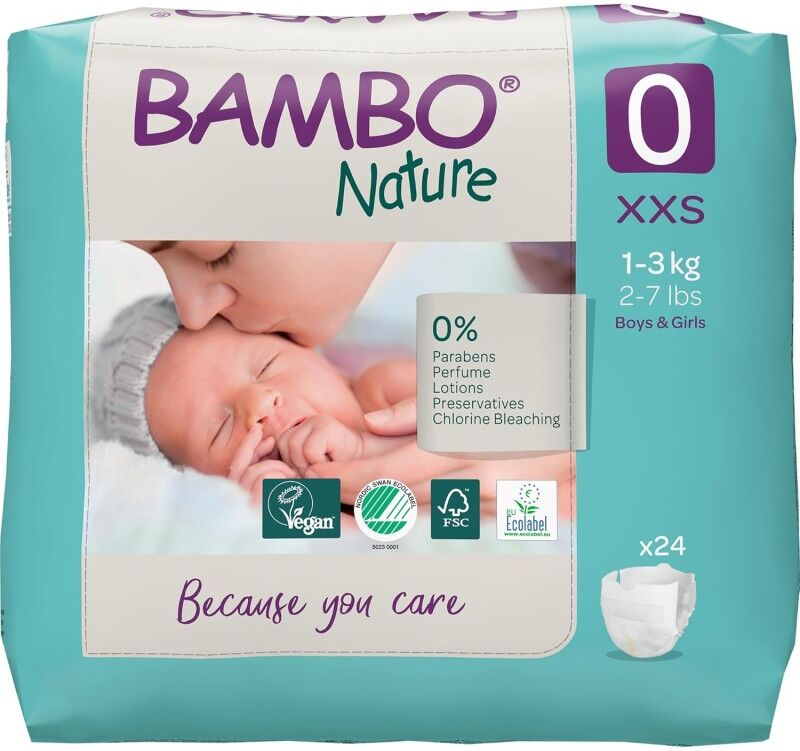
Bambo Nature 0 XXS - 12 paquets de 24 protectionsBambo Nature 0 XXS est une couche pour nouveau-né alliant douceur, efficacité et respect de l'environnement. Conçue au Danemark à partir de ressources responsables, elle contribue à réduire l'empreinte écologique. Extra fines et légères, ces couches garantissent une absorption rapide et performante afin de garder la peau de bébé bien sèche, limiter les fuites et prévenir les rougeurs. Grâce à leurs canaux d'absorption et leur voile ultra-doux, elles offrent une sécurité optimale et un confort quotidien. Caractéristiques essentielles Ultra-minces et très absorbantes : protection fiable contre les petits accidents. Canaux internes : répartissent le liquide pour maintenir une peau saine. Noyau neutralisateur d'odeurs : bloque l'humidité et réduit l'ammoniaque. Voile externe extra-doux : contact agréable avec la peau fragile. Indicateur d'humidité pratique : change de couleur pour signaler le moment du change. Traçabilité assurée : numéro de lot visible sur chaque produit et emballage. Emballage durable : plus de 30 % de plastique recyclé et plus de 50 % de fibres recyclées. Composition sûre : sans parfum, chlore, latex, phtalates ni lotion. Cellulose certifiée FSC, blanchie sans chlore (procédé TCF). Encres sans métaux lourds et impression limitée. Test dermatologique : hypoallergénique et cruelty free. Production responsable : 87 % de déchets valorisés et énergie 100 % renouvelable (principalement éolienne). Guide des tailles Référence Poids recommandé BAMBO NATURE 0 XXS 1 - 3 kg BAMBO NATURE 1 XS 2 - 4 kg BAMBO NATURE 2 S 3 - 6 kg BAMBO NATURE 3 M 4 - 8 kg BAMBO NATURE 4 L 7 - 14 kg BAMBO NATURE 5 XL 12 - 18 kg BAMBO NATURE 6 XXL 16+ kg Composition technique L'absorbant est composé de fibres de cellulose certifiées FSC et de microbilles super-absorbantes en polyacrylate de sodium (SAP). L'extérieur combine polypropylène et polyéthylène, tandis que la surface au contact de la peau est en non-tissé de polypropylène. La couche de diffusion utilise du non-tissé PET/Co-PET. Le tout est assemblé par colle synthétique, avec maintien assuré par des élastiques à base d'élasthanne. Mode d'emploi 1. Préparation : lavez vos mains et ouvrez la couche en dépliant les barrières. 2. Installation : placez le lange sous le bébé, la partie supérieure à hauteur du nombril. 3. Ajustement : ramenez l'avant de la couche et positionnez bien les élastiques aux cuisses. 4. Fermeture : fixez les attaches de façon équilibrée. 5. Vérification : laissez un espace de deux doigts à la taille et assurez-vous qu'aucune zone ne comprime l'entrejambe. 6. Contrôle : sortez correctement les barrières anti-fuites autour des jambes. 7. Remplacement : changez la couche lorsque l'indicateur d'humidité vire de couleur. Les Bambo Nature 0 XXS combinent confort, sécurité et respect de la peau des nouveau-nés. Disponibles dès maintenant sur Senup.be.137,17 €*Shipping: 0,00 €Secure redirect to the provider
-
Why do chlorine, fluorine, and bromine not occur naturally in nature?
Chlorine, fluorine, and bromine do not occur naturally in their elemental form in nature because they are highly reactive and tend to form compounds with other elements. These elements are typically found in nature as part of compounds such as salts or minerals. Additionally, their reactivity makes them unstable in their pure form, leading them to readily react with other elements to form compounds. This is why they are typically found in combination with other elements rather than existing on their own in nature. **
-
What is the name of the adventure nature swimming pool?
The name of the adventure nature swimming pool is "The Grotto." **
-
Why is it actually called Mother Nature and not Father Nature or Human Nature?
The term "Mother Nature" likely originated from ancient cultures that personified nature as a nurturing and life-giving force, similar to the role of a mother. This concept is rooted in the idea of the Earth as a source of sustenance and fertility, which aligns with the nurturing and life-giving qualities traditionally associated with motherhood. Additionally, the association of nature with femininity may also stem from the ancient worship of female deities representing the Earth and fertility. Over time, this association has become deeply ingrained in many cultures and continues to be reflected in the use of the term "Mother Nature." **
-
Doesn't nature also lack water when collecting rainwater?
While it is true that nature can also experience water scarcity during dry periods, rainwater harvesting can help mitigate this issue by capturing and storing rainwater for later use. By collecting rainwater, we can reduce the strain on natural water sources and ensure a more sustainable water supply during times of scarcity. Additionally, rainwater harvesting can help replenish groundwater levels and support local ecosystems by reducing runoff and erosion. **
* All prices are inclusive of VAT and, if applicable, plus shipping costs. The offer information is based on the details provided by the respective shop and is updated through automated processes. Real-time updates do not occur, so deviations can occur in individual cases. ** Note: Parts of this content were created by AI.